Hands-On Review
Pancreatic Cancer Rates in Younger Adults Have Surged Nearly 5x—and It's Tied to Obesity: Should You Start with a Smart Scale, a Diet App, or Medical Scans?
Data from NCKU Hospital reveals that pancreatic cancer patients under 50 surged from 3% to 15%, alongside six other major cancers tied to obesity. Here is how home smart scales stack up against hospital InBody scans, whether AI calorie tracking apps are actually accurate, and how to pick the right smart scale from NT$495 to NT$9,999.
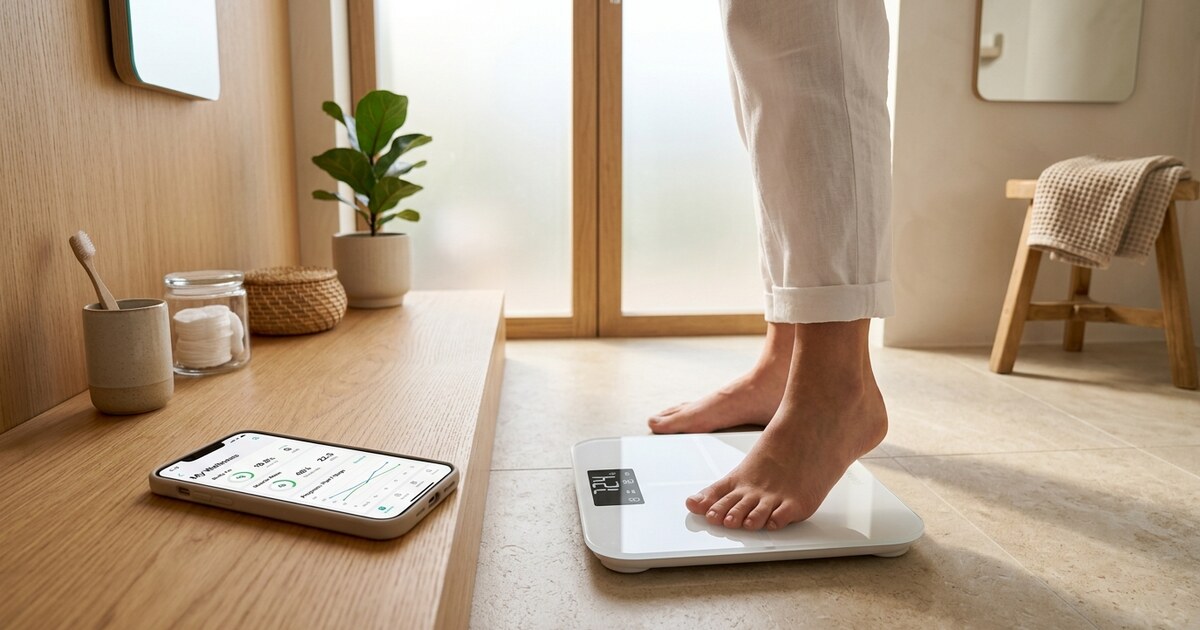
Our Pick
1Xiaomi Body Composition Scale S400
Dual-frequency BIA, NT$495, the best value entry-level pick
Retails for NT$495 in Taiwan, measures weight and body fat in 9 seconds, claims 25 body metrics. A solid pick for a quick daily check-in.
Pros
- Lowest price at NT$495
- 9-second measurement, simplest to use
- Xiaomi Home app is simple, keeps records in one place
Cons
- Syncs steps/sleep/blood oxygen to Google Fit, but not weight or body fat data
- Only 4 foot electrodes, upper-body data is statistically estimated, not directly measured
- Tends to read 3% to 4% higher than InBody
2Future Lab ScanFit
8-point electrodes, mid-range pick with upper/lower body segmentation
About NT$1,680 on PChome. Hand and foot electrodes let it estimate upper and lower body separately, claims 52 metrics in 30 seconds, and can narrow the gap against gym-grade analyzers to 1%-2%.
Pros
- 8-point electrodes, more accurate than foot-only scales
- Splits upper and lower body measurement
- Companion app keeps a complete history
Cons
- Handle must be pulled to chest height or errors get amplified
- App interface takes a few minutes to get used to, not as polished as newer entrants
- Less brand recognition than Xiaomi or TANITA
3TANITA BC-565
Japanese veteran brand's 9-in-1 analyzer, steady long-term tracking
On sale for NT$2,980 (regularly NT$4,980) on TANITA's official site, 9-in-1 segmental measurement. TANITA's Taiwan distributor has been around for years, with mature long-term logging.
Pros
- Long-standing Japanese calibration experience, stable readings
- 9-in-1 segmental measurement
- Supports 4 user profiles
Cons
- About 6x the price of the Xiaomi model
- App hasn't been redesigned in years, logs take a few menu taps to find
4InBody Home Dial H20N
Closest to clinical logic at home, in a different price tier
On promotion for NT$9,999 on momo (regularly NT$15,999), 8-point segmental measurement without relying on demographic estimation, the closest a home scale gets to hospital-grade InBody logic.
Pros
- Original InBody logic, no demographic estimation, closest to clinical accuracy
- 8-point segmental measurement, splits limbs and torso
- InBody's credibility in medical and clinical settings
Cons
- Takes over 30 seconds from power-on to reading, slower than a simple scale
- Most buyers use it once or twice a week as a calibration check, not daily
- 2.7kg, not the easiest to store or move
See the differences at a glance
Ratings, pricing, and supported platforms side by side, so you can pick faster.
| Item | Xiaomi Body Composition Scale S400 | Future Lab ScanFit | TANITA BC-565 | InBody Home Dial H20N |
|---|---|---|---|---|
| Overall rating | 3.8 | 4.1 | 4.3 | 4.4 |
| Price | NT$495 | From NT$1,680 | NT$2,980 (regularly NT$4,980) | NT$9,999 (regularly NT$15,999) |
| Platforms | iOS / Android | iOS / Android | iOS / Android | iOS / Android |
| Biggest pro | Lowest price at NT$495 | 8-point electrodes, more accurate than foot-only scales | Long-standing Japanese calibration experience, stable readings | Original InBody logic, no demographic estimation, closest to clinical accuracy |
| Watch out for | Syncs steps/sleep/blood oxygen to Google Fit, but not weight or body fat data | Handle must be pulled to chest height or errors get amplified | About 6x the price of the Xiaomi model | Takes over 30 seconds from power-on to reading, slower than a simple scale |
| Go to Xiaomi Body Composition Scale S400 | Go to Future Lab ScanFit | Go to TANITA BC-565 | Go to InBody Home Dial H20N |
Sponsored
I've recently seen a post making the rounds on Threads by Dr. Shen Yen-Shen, a surgeon at National Cheng Kung University (NCKU) Hospital and a member of the Cancer Prevention and Control Group under the Healthy Taiwan Promotion Committee. He pointed out that while patients under 50 used to make up only about 3% of all pancreatic cancer cases, recent data from NCKU Hospital shows that figure has climbed to 15%, a nearly fivefold increase. The same report highlighted that six of Taiwan's top ten cancers are linked to obesity: colorectal cancer, breast cancer, liver cancer, thyroid cancer, gastric cancer, and uterine corpus (endometrial) cancer. I happened to have an old smart scale lying around at home with a nearly dead battery. Seeing that post prompted me to dig it out, charge it up, and look into home smart scales, diet tracking apps, and hospital-grade scans to figure out which numbers I can actually trust.
Six Major Cancers Are Linked to Obesity, and the Number on the Scale Isn't Enough
The mechanism doctors point to is that fat tissue itself drives chronic low-grade inflammation, insulin resistance stimulates abnormal cell growth, and excess body fat changes hormone levels, and these three things stacked together are why fat is tied to these cancers, not just a vague "overweight people get sick more" claim. International data points the same way. A 2025 study analyzing over 275,000 pancreatic cancer cases found the annual percentage change for the 15-to-34 age group was 4.35%, nearly three times faster than the 1.54% seen in the 35-to-54 group. Another dataset tracking 1990 to 2019 global trends found pancreatic cancer incidence among people under 50 rose 46.9%, every 10-centimeter increase in waist circumference was tied to an 11% higher risk, and smokers faced 2.2 times the risk of non-smokers. These are global figures and don't share Taiwan's exact statistical baseline, but the direction is the same: body fat percentage and waist circumference are worth tracking long-term far more than the kilogram number on a bathroom scale. Waist circumference doesn't need any special equipment either, a regular cloth tape measure does the job. Standing upright on an empty stomach right after waking up and wrapping the tape around your navel is the most overlooked, yet easiest, number to track.
Body fat is trickier to track. Home smart scales, diet tracking apps, and hospital-grade equipment all give different numbers. I've compared the smart scale picks listed at the top of this article, and below I'll break down whether each tool is trustworthy and how to combine them.
Are Home Smart Scales Accurate? How Do They Compare to Hospital InBody Scans?
Bottom line first: home smart scales don't measure your "actual" body fat percentage, they produce an estimate from bioelectrical impedance analysis (BIA). A weak electrical current passes through your body, fat conducts electricity worse than water-heavy tissue, so higher resistance is read as more fat. Single-frequency consumer scales generally run ±4 to 6 percentage points off, meaning if your true body fat is 18%, a reading of 13% to 23% is still within normal error. Worse, the same person stepping onto different brands of scale at the same time can see readings vary by 2% to 5%, because each brand uses its own estimation algorithm and demographic calibration, so there's no single "correct answer."
Professional analyzers like InBody, found in hospitals and gyms, use dual-energy X-ray absorptiometry (DEXA) as their calibration benchmark, and InBody claims a 0.93 correlation with DEXA, noticeably more accurate than home models. But it's still not immune to variables: how much water you've had, measuring right after a workout, or right after a hot shower all shift blood flow and body water, which shifts the reading too. The habit worth building isn't obsessing over whether one single reading is exactly right, it's measuring at the same time of day under the same conditions, for example every morning on an empty stomach, and watching which direction the trend line moves. That's far more useful than any single number.
For a one-off InBody scan, you don't need to book a hospital appointment. Gym members often get one free scan a month, municipal sports centers around Taiwan frequently run free testing periods, and Decathlon runs occasional free measurement events. If you don't want to wait for a free slot, a paid walk-in test usually runs NT$200 to NT$300 at sports centers and some gym chains, more convenient than a hospital trip. Just keep in mind maintenance and calibration at these venues may not match hospital standards, so treat the number as a rough benchmark, not gospel. Only people doing genuinely rigorous tracking need to keep returning to the exact same machine.
The Scales Listed at the Top of This Article, and Which One Fits You
The Xiaomi Body Composition Scale S400 is the best value of the four, retailing for NT$495 in Taiwan. It uses dual-frequency BIA, claims 25 body metrics, and clocks weight and body fat in 9 seconds. The Xiaomi Home app is simple and keeps your history in one place. The catch is that Xiaomi's app can sync steps, sleep, and blood oxygen to Google Fit, but not weight or body fat data, those numbers stay inside Xiaomi Home, and Apple Health integration is even more limited, worth knowing if you already track everything in one dashboard. It also only uses 4 foot electrodes, so upper-body numbers like muscle mass and protein percentage are statistically estimated rather than directly measured, and readings tend to run 3% to 4% higher than InBody. Fine for a quick daily check on general direction, just don't take the fine print too literally.
If you want better accuracy without spending much more, Future Lab's ScanFit sits in the middle, around NT$1,680 on PChome. It uses 8-point electrodes touching both hands and feet, so it can estimate upper and lower body separately, claims 52 metrics in 30 seconds, and can narrow the gap against gym-grade analyzers to 1% to 2%, provided the handle is pulled up to chest height, since bad posture throws the error off. The point of splitting upper and lower body, or limbs and torso, is being able to tell whether weight gained after training is muscle or just water retention, or catching a left-right muscle imbalance, something a single whole-body percentage can't show, which is why segmental models cost more than plain foot-only scales. The app interface takes a few minutes to get used to on first use, and isn't as polished as newer entrants.
A step up is the TANITA BC-565, on sale on TANITA's official site for NT$2,980, down from NT$4,980. It's a 9-in-1 model with segmental measurement, and TANITA's Taiwan distributor has been around for years with solid long-term logging. The downside is the app hasn't had a real redesign in years, finding past records takes a few menu taps, and it costs about six times the Xiaomi model. Best for people who already train regularly, don't mind an older interface, and want reliable long-term muscle-mass tracking.
If budget isn't the issue and you want the closest thing to clinical data at home, InBody's own consumer model, the Home Dial H20N, sells on momo on promotion for NT$9,999, down from NT$15,999. It uses 8-point segmental measurement without relying on demographic estimation, the closest a home scale gets to hospital InBody logic. The catch is it takes over 30 seconds from power-on to a finished reading, and in practice most buyers end up using it once or twice a week as a calibration check rather than every morning. Treat it as your daily scale and the price-to-use ratio doesn't really work out.
Diet Tracking Apps Help, but Don't Trust AI Photo Recognition Too Much
The scale alone isn't the whole picture, what you actually eat is what moves the number. In Taiwan the two most common diet logging apps are MyFitnessPal and FatSecret. MyFitnessPal has a huge database, but the same food item often has several duplicate entries with conflicting nutrition numbers, barcode scanning is limited on the free tier, and Premium runs $19.99 a month, which adds up over a year. FatSecret's free tier is genuinely complete, barcode scanning, macros, and community features all work without paying, and its database is organized by brand and restaurant, which keeps it tidier. The downside is a clunkier entry flow, if a Taiwanese bento box has five side dishes, you might need five separate entries to log it properly. Both databases lean heavily Western too, dishes like braised pork rice (lu rou fan) or thick pork soup (rou geng) are often missing, so you end up building custom entries or picking a rough substitute, a common complaint among Taiwanese users.
A lot of apps are now pushing AI photo recognition for calories. It's convenient, but a study this past July by NIH postdoctoral researcher Aaron Hengist tested four apps, MyFitnessPal, Lose It!, Cal AI, and Appediet, against 102 precisely weighed real meals, and found AI photo recognition underestimated calories by an average of 250 to 345 per meal, and fat by about 30 grams, with bigger errors on low-carb or keto meals. It read Western meals with fixed portions like sandwiches or salads fairly well, but errors got bigger on family-style dishes or hot pot where portions vary. The study hasn't gone through peer review yet, so the exact numbers could shift, but the direction, photo recognition tends to underestimate calories, holds up. For precise calorie control, manual entry or a kitchen scale still wins.
My own routine now is simple: step on the scale once every morning on an empty stomach to watch the trend, and only pull out the diet app on weekends, when eating out, or at meals where portions are hard to guess. On an ordinary weekday at home the portions barely change, so logging them tells me nothing new, and that combination has stuck a lot longer than trying to photograph every single bite. Waist circumference and body fat percentage are the two numbers this pancreatic cancer news actually got me paying attention to, not the kilogram reading on the bathroom scale.
Related

Tech Layoffs Just Passed 200,000 Workers in 2026: The Resume, LinkedIn, and Unemployment Tools Worth Setting Up Now
2026 has already logged 365 layoff events and over 209,000 workers cut, with Oracle alone shedding 30,000 jobs and Microsoft trimming 4,800 from Xbox. Whether or not it hits your company next, here's what actually helps, from ATS resume checkers to how unemployment insurance and COBRA really work.

Which Translation App Should You Use? Google Translate, DeepL, and Papago Hands-On Comparison
After keeping Google Translate, DeepL, and Papago on my phone and testing them side by side for a while, I realized each excels in very different scenarios. Here is a breakdown of their pros, cons, and target users to help you decide which one to install.

F1 Italian Grand Prix at Monza Kicks Off Tonight: Don't Get Locked into an Annual Contract—Where to Watch the Broadcast
The Monza Grand Prix main race gets underway tonight at 9:00 PM Taiwan Time. With ELTA holding exclusive F1 broadcasting rights for four full seasons from 2026 to 2029, here is a breakdown of how to choose between ELTA.tv, MOD, and Hami Video—plus why you can't stream live on F1 TV Pro in Taiwan.