Zelda 40th Anniversary Switch 2 Launches October 29 in Taiwan: How It Differs from the Standard Edition and Whether the New Look Is Worth the Extra Cash
Nintendo announced the Zelda 40th Anniversary Edition Switch 2 on September 8, launching October 29 at 62,980 yen without a bundled game. Taiwan gets a simultaneous release, though local pricing has yet to be announced. Here is a breakdown of the actual differences compared to the standard model, the Japanese OS trap on imported units, scalper prices after US pre-orders sold out in four hours, and how to factor in the November 5 Ocarina of Time remake.

I didn't catch yesterday midnight's The Legend of Zelda 40th Anniversary Direct until the next morning, but what hit my feed first wasn't even the Ocarina of Time remake—it was the news that pre-orders for the anniversary edition console in the US were already completely cleaned out. Nintendo's official September 8 press release made it crystal clear: the Nintendo Switch 2 The Legend of Zelda 40th Anniversary Edition launches on October 29, priced at 62,980 yen including tax for the Japanese domestic model, without any bundled game. Over in Taiwan, Nintendo Taiwan announced the same launch date of October 29, but as of September 9 when I'm putting this together, local pricing hasn't been announced yet—which is currently the biggest blank spot everyone is asking about.
Let's clear up the most common misconception right off the bat. The official package contents list the console itself, specially designed Joy-Con 2 (L) and (R), specially designed wrist straps, a specially designed dock, Joy-Con 2 grip, AC adapter, USB-C charging cable, and an Ultra High Speed HDMI cable. This list is 100% identical to the standard Switch 2—nothing extra is included. The storage capacity hasn't been expanded, the specs haven't been upgraded, and there is no bundled game. The difference is entirely cosmetic. The back of the console, dock, and Joy-Con all feature Triforce motifs. The Joy-Con 2 controllers sport a black and teal colorway with gold-accented stick rings, and there's a subtle pixel-art Link tucked onto the lower edge of the left Joy-Con. The front of the dock features a mosaic of gold triangles. What you're paying for is this coat of paint, not a better machine.
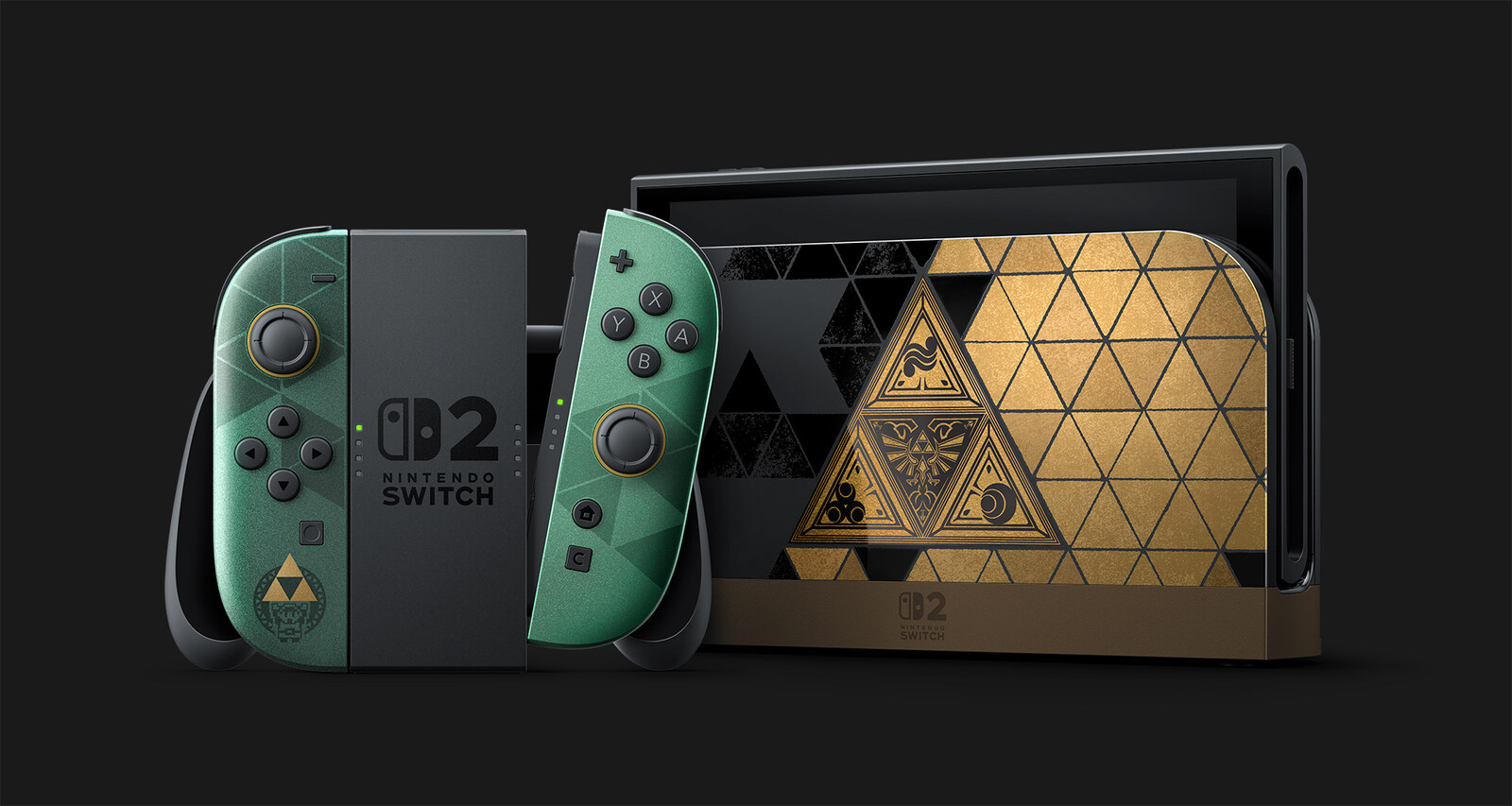
(Image source: Nintendo official press release, September 8)
So how much of a premium are you actually paying for this look? We can actually do the math. In Japan, the standard Japanese-only model already jumped from 49,980 yen to 59,980 yen on May 25, meaning the anniversary edition at 62,980 yen is an extra 3,000 yen. In the US, the standard edition increased from $449.99 to $499.99 on September 1, while the anniversary edition is officially listed at $519.99—a $20 premium. Converted to New Taiwan Dollars, the markup in both markets lands right around NT$600 to NT$700. For a special edition console, that's remarkably restrained. Nintendo isn't using an anniversary as an excuse to gouge buyers. Taiwan pricing hasn't been announced yet, but if they follow the same logic, it should sit roughly NT$1,000 above the standard model. To be clear, that's just my extrapolation based on Japanese and US pricing, not an official number—we'll still have to wait for Nintendo Taiwan's official announcement for the real figure.
Speaking of pricing, the standard Switch 2 in Taiwan just saw a price hike on September 1, bumping from NT$14,380 to NT$15,880—an increase of NT$1,500, or about 10.4%. Nintendo's official explanation cited changes in the market environment, but the real driver is skyrocketing global costs for memory and storage components. In that same wave of adjustments, US prices went up around 11%, and Japan's hike was even steeper. So whichever console you buy right now, the price tag you see already reflects the increase. "Waiting to see if it gets cheaper" simply isn't a realistic option at this point.
If you're thinking about importing one from Japan through a proxy buying service, there's a trap you need to know about first. Nintendo's official press release explicitly states that the Japanese model runs on a Japanese-only operating system and is intended for domestic sale in Japan. In Japan, the standard Switch 2 comes in two versions: a Japanese-only model for 59,980 yen and a multilingual version for 69,980 yen. However, Nintendo only announced a Japanese OS version for the anniversary edition—there is no multilingual anniversary console. Nintendo Japan's own page for the Japanese-only model spells out the limits, the system supports Japanese and nothing else, there are no language or region settings in the menus at all, it can only be linked to a Nintendo Account registered in Japan, the eShop only sells you titles aimed at the Japanese region, and physical software released overseas falls outside warranty coverage. Nintendo has not declared the game cards themselves region locked, so a Taiwan copy of Ocarina of Time should read fine in a Japanese unit, but Nintendo also states it does not guarantee the console works properly outside its intended region, which means anything that goes wrong is on you. That means the attractive 62,980 yen price tag buys a console with a Japanese interface whose account and digital purchases are locked to Japan, and grey-market imports don't come with Taiwan official warranty coverage either. Unless you were already planning to collect a Japanese-spec unit, it's really not worth the gamble just for that slight price difference.
There are two accessories this time around as well. The Nintendo Switch 2 Pro Controller The Legend of Zelda 40th Anniversary Edition retails for 12,980 yen including tax. For the first time, it comes bundled with a display stand. Nintendo's official product page describes it as an "exclusive display stand printed with a map of Hyrule," with zero mention of any charging or connectivity capabilities. Plainly speaking, it's just a display stand meant for looking pretty on a shelf, and the controller still comes with a standard USB charging cable to plug in yourself. The Carrying Case costs 3,980 yen including tax and comes with a screen protector, featuring a black base with gold Triforce patterns, brown piping, and a green circular zipper pull. In Taiwan, the standard Pro Controller is currently retailing for around NT$2,350 (based on official Taiwan distribution listings on momo), while 12,980 yen converts to roughly NT$2,660 at September 9 exchange rates—a difference of just over NT$300. In terms of ergonomics and feel, the special edition doesn't give you anything extra. That extra NT$300 is purely for the color scheme and that ornamental stand, so you'll have to weigh that for yourself.

(Image source: Nintendo official press release, September 8)
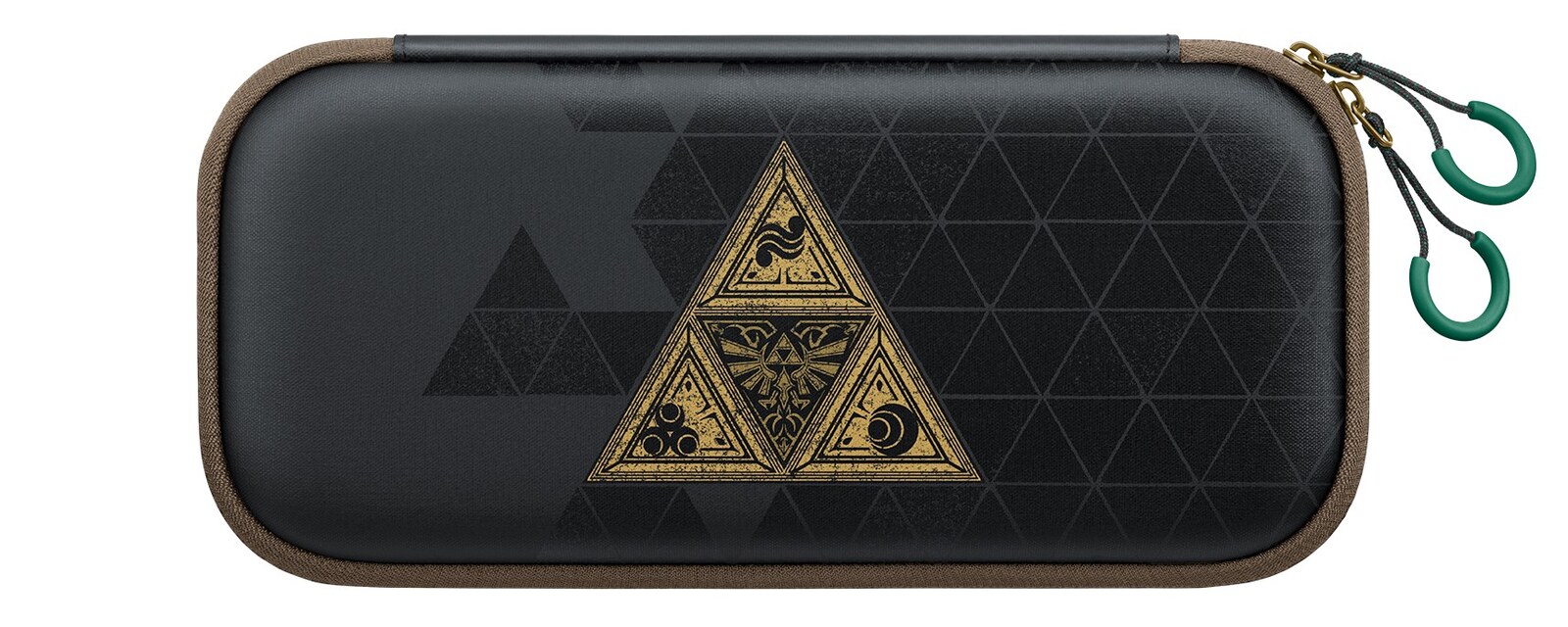
(Image source: Nintendo official press release, September 8)
The real headache is actually getting your hands on one. Pre-orders in the US opened on September 9, and the official My Nintendo Store was marked as sold out in roughly four hours. Amazon and Target were cleared out in a single wave as well. Immediately after, resale prices on eBay surged straight to $730–$900—effectively tacking an extra $200 to $400 onto the retail price—and people are even asking $200 for the special edition Pro Controller. Paying $800 for a $519.99 device means that extra cash is buying you nothing more than a cosmetic theme and getting it a few days earlier, and personally I don't think that's worth it. Taiwan hasn't opened pre-orders yet, which actually gives us a bit of breathing room to decide whether we really want in. Nintendo Taiwan hasn't announced a pre-order date or which retailers will carry it either, so the practical move is to watch the Nintendo Taiwan site and the usual official distribution channels rather than panic-buying from a reseller now.
That being said, what will really make or break your decision isn't the console itself—it's the remake of The Legend of Zelda: Ocarina of Time arriving on November 5. This is a Switch 2 exclusive, priced at $59.99 in the US, and physical retailers in Taiwan are already taking pre-orders, with PChome listing it at NT$2,080. Language is not a concern, the supported language list on Nintendo's official product page includes Traditional Chinese, which matters for a remake that expanded the dialogue this much. Nintendo's official description points to substantial updates: fully remade visuals, voice acting in cutscenes, expanded dialogue, and an orchestral re-recording of the soundtrack. Mechanically, they've added jumping and sprinting controls along with modernized camera logic, with Nintendo positioning it as "a great entry point into the Zelda series." There's also mobile integration via ZELDA NOTES, alongside Young Link and Young Zelda amiibo slated for 2027 that unlock retro-style masks when scanned. ZELDA NOTES isn't entirely new—it's a free service within Nintendo's mobile app that doesn't require a Nintendo Switch Online membership. For Breath of the Wild and Tears of the Kingdom, it currently offers voice-guided navigation to map pins, voiceover narrations from characters like Zelda when you reach specific locations, QR code sharing for items or blueprints, and a daily roulette spin for random buffs. For Ocarina of Time, Nintendo has only confirmed "support" so far without detailing specific features, so I'm still waiting to see what that entails.
There's another easily overlooked detail: the console drops on October 29, but the game doesn't release until November 5—a full week apart. On top of that, Nintendo isn't offering a console-and-game bundle this time around. That means even if you get your hands on the anniversary console on October 29, you'll still have to wait another week before you can pop in Ocarina of Time, and you will have to pay for the game separately.
(Image source: Nintendo official press release, September 8)
When I first saw pre-orders selling out in seconds, my wallet definitely twitched. But after digging into the packaging list, I realized I was just completely captivated by the gold triangles on that dock—it had nothing to do with whether the hardware was better. If you already own a Switch 2, unless you're a hardcore Zelda collector who plans to keep the console out on display as a showpiece, there is zero reason to upgrade. The hardware is identical, and that money is far better spent on games and accessories. If you don't have a Switch 2 yet and were already planning to pick one up toward the end of the year, this October 29 model is easily the most attractive entry point of the year. As long as the Taiwan price premium stays around NT$1,000, it's well worth waiting for Nintendo Taiwan's announcement before making a move. If you're itching to play right now, the standard edition is readily available anytime for NT$15,880—buying the console now and jumping straight into Ocarina of Time on November 5 is a totally viable route. The only thing I strongly advise against is paying scalper prices. With a global simultaneous launch on October 29 and pre-orders not even open in Taiwan yet, there's no reason to pay double right now for a console that isn't even out. My personal plan is to wait until Taiwan pricing lands. If the markup really does stay within NT$1,000, that dock will probably still tempt me. The official details and current prices for all three of these are laid out in the product cards at the end, if you want to compare them side by side.