The AI Boom Sent South Korean Real Estate Through the Roof: Do You Really Understand Taiwan's Youth Mortgage and Social Housing?
South Korea's AI wealth effect has pushed Seoul real estate to the third most expensive in the world, prompting Lee Jae-myung to call the housing market a 'ticking time bomb.' Meanwhile, I dug into Taiwan's Youth Housing Loan 3.0 to debunk the viral rumor of 'NT$2 million interest-free for two years'—turns out NT$2 million is an income ceiling, not an interest-free quota—along with social housing eligibility and application portals.
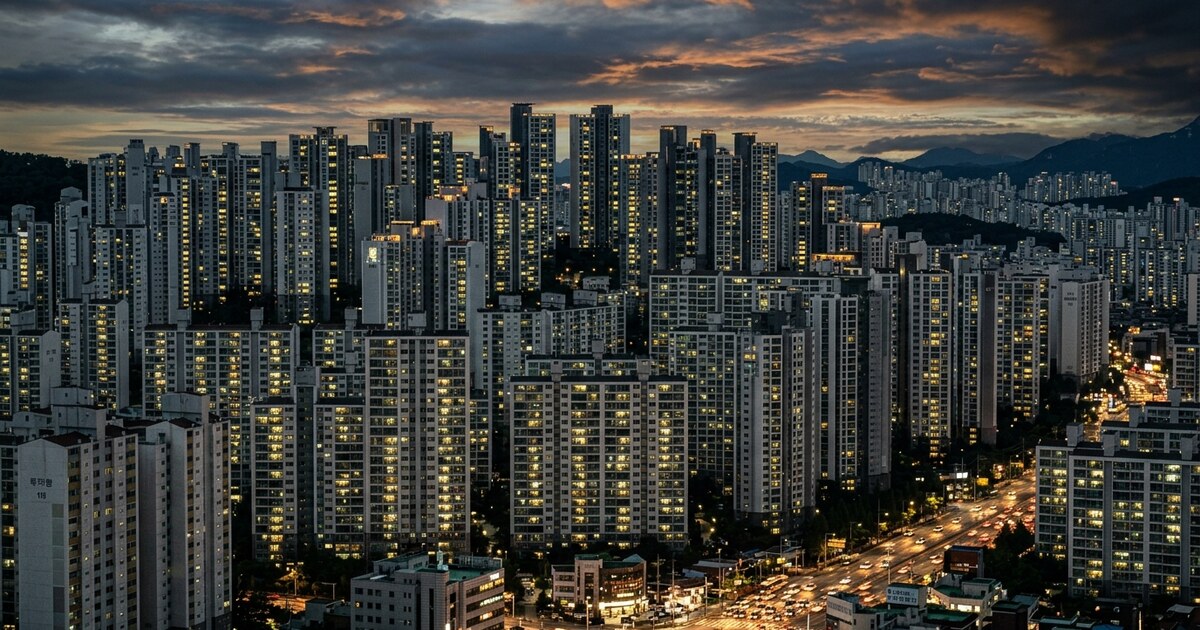
Recently, while browsing international news, I saw South Korean President Lee Jae-myung make a grave statement in August, warning that Korea's housing market is a "ticking time bomb" that could drag the economy into decades of stagnation. The root cause is inseparable from the AI boom. Semiconductor supply chain giants like Samsung Electronics and SK Hynix have raked in massive windfall profits from this AI wealth effect. Soaring employee bonuses and stock valuations have directly pushed up real estate prices around their fabrication plants and in central Seoul. In the first year of Lee's presidency, apartment prices in the Seoul metropolitan area surged by 14%, with the average price in downtown Seoul hitting around US$25,545 per square meter. That makes it the third most expensive real estate market in the world, trailing only Hong Kong and Zurich, having more than doubled over the past decade. In one highlighted case, a 31-year-old new mother saw the market value of her current home reach 1.9 billion Korean won—roughly NT$43 million to 44 million—up 30% compared to two years ago. At this rate of appreciation, young people relying solely on their salaries simply cannot keep up.
At first, I thought this was just another piece of foreign news to spectate from across the sea, something to skim past after reading the headline. But then I happened to look into the popular phrase frequently heard in Taiwan regarding youth first-time homebuyer loans: "NT$ 2 million interest-free for two years." That was when I realized the version in my memory was completely wrong—the NT$ 2 million figure and the interest-free claim didn't match up at all. So I spent an afternoon going through the actual rules for both paths in Taiwan, youth home loans and social housing.
How Is the South Korean Government Responding, and Are Young People Buying It?
The Seoul metropolitan area accounts for half of South Korea's total population of 51 million, meaning housing prices directly affect the wallets of half the country. The Lee administration had already tightened mortgage restrictions last October, capping household debt growth targets at 1.5% in an attempt to directly curb housing prices. However, the controls were so stringent that buyers couldn't even borrow the necessary funds for standard closing balance payments or relocation loans. As public grievances among those waiting in line to borrow grew louder, financial authorities shifted course in August, loosening the debt growth target to around 3%. Yet this easing was strictly targeted at owner-occupiers with actual closing needs—not investors or young first-time homebuyers looking for mortgages—meaning the financial pressure on young first-time buyers didn't ease up at all. In addition, the government announced plans to construct more than 230,000 housing units in the Seoul metropolitan area before 2030, alongside a larger-scale, longer-term plan for 1.35 million units. Lee also previously raised property holding taxes on multiple-home owners to flush out vacant properties and idle housing stock. Predictably, landlords passed the tax burden straight onto rents, sparking such fierce backlash that some policies were subsequently rolled back. According to Gallup polling, after this sequence of moves, Lee's approval rating dropped to 40%, with support among those in their twenties plummeting to just 25%. It isn't that young people don't care; it's that they feel the policies haven't actually helped them.
Taiwan's Youth Housing Loan 3.0: That "NT$ 2 Million Interest-Free for Two Years" Pitch Is Actually a Big Misunderstanding
A common claim heard in Taiwan is that the youth first-time homebuyer mortgage offers "NT$ 2 million interest-free for two years." After checking the official announcements on the Ministry of Finance website, I realized this rumor completely conflated the facts: NT$ 2 million is the applicant's income ceiling, not an interest-free loan quota. The official name is the Youth Care and Housing Loan Scheme 3.0 (Youth Housing Loan 3.0). Finalized by the Executive Yuan on July 16 this year, it took effect on August 1 as the successor to Youth Housing Loan 2.0, with applications open through July 31, 2029, under the Ministry of Finance.
To qualify, the applicant must be under 50 years of age at the time of application, and the applicant's age plus the loan term cannot exceed 80 years. The borrower's individual total annual income must not exceed NT$ 2 million (spousal income is not combined here), and the household must not own any residential property. There are also regional caps on the property's appraised value or total purchase price: NT$ 35 million in Taipei City; NT$ 25 million in New Taipei City and Hsinchu County/City; and NT$ 20 million in other counties and cities. Here is a detail that is easy to mix up: while it's true that income is assessed based on the borrower alone, the "no self-owned residential property" rule applies to the entire household. If the borrower, their spouse, or any minor children have a property registered in their name, you are disqualified. Calculating income separately and evaluating real estate collectively are two different matters—don't assume having a home under your spouse's name won't be an issue.
In terms of loan amounts, general households can borrow up to NT$ 10 million (single applicants also fall under "general household," so marriage is not required). Newlywed couples married within the two years prior to applying can receive up to NT$ 12 million, and households with minor children can qualify for up to NT$ 15 million. The genuine benefit lies in the interest rate subsidy, designed under a "3+3 year" model. For the first three years, all borrowers enjoy an interest rate subsidy of 2 notches (0.5 percentage points)—with the government subsidizing 1.5 notches (0.375%) through the Ministry of the Interior's Housing Fund, and participating state-owned banks discounting an additional half-notch (0.125%) on their own. After three years, the subsidy decreases by half a notch each year until it expires, at which point the rate returns to the original loan interest rate. After the discount, the preferential rate lands around 1.775%. Put simply, it is not two years of zero interest; it is a 2-notch rate discount for the first three years that gradually phases out afterward. That is quite different from the rumors circulating on the street, so before applying, I recommend asking a participating state-owned bank directly to clarify which loan quota and bracket applies to you.
Social Housing: Eligibility Thresholds and Regional Application Portals
Compared to buying a home with a mortgage, social housing is an alternative route. The core qualification is that neither the applicant nor their family members can own any residential property. Taipei, New Taipei, Keelung, and Taoyuan are considered a common living zone, so if you apply for Taipei social housing, family members cannot own property across Taipei, New Taipei, Keelung, or Taoyuan. Taking Taichung as an example, the current threshold requires household annual income to be below NT$ 1.35 million, and average monthly income per person cannot exceed NT$ 56,270. Rents are roughly 80% of market rates, with a maximum lease term of six years. Winning lottery rates vary drastically: data compiled by the Social Housing Advocacy Consortium shows success rates ranging anywhere from a low of 2.3% to a high of 48%, so luck is definitely a factor.
Here, you need to differentiate between two situations. One is newly constructed social housing projects. Central government social housing rentals announced by the National Housing and Urban Regeneration Center (HURC) cover six specific projects: Rose Home and Jiangcui Home in Banqiao and Yingtao Home in Yingge (all New Taipei), Gongcheng Home in Nantou (its first-ever central social housing project), Kainan Home in Tainan, and Renwu Home in Kaohsiung, totaling 1,500 units. The application period runs from August 14 to September 14, meaning right now (in early September), this batch is still open for applications. Those who haven't applied should act fast over these few days. However, the lottery draw is on December 16, and move-in is not expected until construction is completed on March 1, 2027. This means you are applying for projects that haven't been completed yet; miss this window, and you will have to wait for the next announcement.
The other situation is completed, existing social housing stock that accepts applications on an ongoing basis. Taiwan currently has over 30,000 completed social housing units, with Taipei and New Taipei accounting for nearly 70% of them. For these units, the wait time between winning the lottery and moving in is far shorter than for new construction. If you need housing urgently, targeting these completed units is your best bet. As for application channels: Taipei City goes through the Taipei City Social Housing Rental Application portal or the Safe & Happy Rental Website (安心樂租網); New Taipei City uses the New Taipei City Housing and Urban Regeneration Center or the Housing Subsidy Information Service Website; Taichung uses the Taichung Social Housing Common Good Website (台中社宅共好生活網); Kaohsiung checks through its Urban Development Bureau; and the nationwide portal is the Social Housing section of the Ministry of the Interior's Real Estate Information Platform. Whichever county or city you wish to apply for, registering directly on its corresponding official website is the most accurate way.
Can Young Taiwanese People Actually Afford Homes? The Numbers Tell a Contradictory Story
While researching, I found an intriguing comparison: according to statistics from Yungching Real Estate based on Joint Credit Information Center (JCIC) data, the share of home purchases made by young adults aged 25 to 35 across Taiwan's six special municipalities has actually increased across the board over the past five years. Taoyuan saw the biggest increase, rising 4.4 percentage points from 29.3% in 2021 to 33.7% in 2025. Tainan rose by 2.8%, and New Taipei grew by 2.6%. The main reason cited is the buying frenzy driven by the New Youth Housing Loan—a "buy today or pay more tomorrow" mentality—along with many buyers relying on parents for down payment assistance. Furthermore, Taiwan's stock market has performed strongly in recent years, allowing a wave of "young stock market whizzes" to accumulate their down payments early. However, Taipei City's mortgage burden ratio reaches a staggering 63.9%, meaning that even if someone manages to buy, the monthly repayment pressure remains brutally intense. A rising share of youth homebuyers does not mean buying a home has gotten easier; it suggests that one group of people is choosing to stretch themselves to buy right now, while an even larger majority has simply given up on the math altogether and turned straight to renting or social housing.
Taiwan and Korea aren't really the same situation. One has real estate driven sky-high by an AI wealth effect, the other has buying momentum propped up by mortgage policy and parents' down payments. But the "NT$2 million interest-free for two years" line I'd been repeating for who knows how long turned out to be flat-out wrong, which is a little embarrassing. Next time I hear one of these bite-sized policy claims, I'm checking the Ministry of Finance or Ministry of the Interior site myself before I repeat it to anyone else.
Sponsored
Related

Taiwan Stocks at 46,331 Points and a 29x P/E: Is It Still a Good Time to Jump In? Bull vs. Bear Arguments and Key Numbers Broken Down
With Taiwan stocks crossing the 46,000-point threshold and the P/E ratio reaching 29.15x—well above historical norms—this post lays out the bull and bear arguments alongside the hard numbers, without trying to time the market for you, so you can evaluate whether and how to enter.

Bitcoin Cut in Half Then Bounced Back to $80K This Year: Is It Still Worth Buying? Price, ETF Flows, and Risk Breakdown
After getting cut in half from its October 2025 all-time high, Bitcoin rebounded back above $80,000 in August 2026. Here is a breakdown of price action, crash drivers, ETF capital flows, and institutional forecasts—laying out both bull and bear arguments so you can decide for yourself whether to enter.

Are Financial Certification Question Banks on Shopee Worth Buying? An Honest Review of SK Interactive Notes
Official examination bodies only provide past papers from the last three sessions without answer explanations—so what exactly do you get from a NT$300 to NT$500 (New Taiwan Dollar) interactive question bank on Shopee? I analyzed all 25 question banks from SK Interactive Notes, breaking down pricing, question volume, delivery logistics, and the non-refundable risks involved.