Hands-On Review
Silicon Wafers See First Across-the-Board Price Surge in 3 Years: Amid Massive Memory Shortages, Should You Buy Laptops and Phones Now?
Memory and silicon wafers are seeing a rare across-the-board price surge, and PC brands have already signaled 15% to 20% price hikes in the second half of the year. Here's a breakdown of what's driving this spike, along with 5 laptop picks that still offer reasonable value right now—ranging from everyday productivity machines and gaming laptops to used Macs.

If you've been browsing tech forums or following the news lately, you've probably seen the phrase "silicon wafer price hikes" popping up everywhere. This isn't clickbait alarmism—it's actually happening. In the first quarter of 2026, average DRAM contract prices surged over 50% compared to Q4 of last year. TrendForce later even revised its forecast upward to a 90% to 95% quarter-over-quarter leap, while IDC projects that supply growth for both DRAM and NAND this year will fall below historical averages. Multiple PC brands have already announced plans to raise prices by 15% to 20% in the second half of the year. As for the headline's mention of "silicon wafers seeing their first across-the-board price hike in 3 years," for that "3-year" baseline, the data I've found so far only tracks price hikes relative to Q4 of last year. In this post, I'm breaking down what's actually driving this surge, why it doesn't look like a short-term phenomenon, and which laptop models I consider reasonable value at this stage if you're looking to buy right now.
This Price Surge Isn't a Supply-Demand Mismatch—It's AI Siphoning Off Capacity for the Long Haul
Unlike previous memory shortages, IDC put it pretty bluntly this time: this isn't a temporary supply-and-demand mismatch. Global silicon wafer manufacturing capacity is being systematically redirected elsewhere for the long haul. The big three memory makers—Samsung, SK Hynix, and Micron—have all shifted their limited capacity toward higher-margin enterprise products. Between traditional servers and AI data centers, enterprise demand will gobble up over 70% of the world's high-end memory chip output in 2026, and that appetite shows zero signs of slowing down. In other words, this price spike isn't a one-off accident like a sudden factory shutdown or a natural disaster snapping the supply chain. AI infrastructure is actively competing with consumer electronics for fab capacity. In my assessment, this capacity squeeze isn't something that's going to resolve itself in just a few months.
So, Should You Buy a Laptop Right Now?
Here's my take: if you were already planning to upgrade your laptop within the next year or two, pulling the trigger now will likely work out cheaper than waiting. The logic is straightforward: PC brands have already stated publicly that prices will go up 15% to 20% in the second half of the year. Furthermore, the root cause is structural capacity crowding, not the typical "just wait and prices will drop once promotions end" scenario. Rather than paying more down the road for identical specs, you're better off getting a fully specced-out machine ahead of time.
On top of that, I'd suggest that if your budget allows, aim a bit higher and opt for a slightly pricier machine with better specs rather than an entry-level model that just barely gets by. The reason is that we've entered an era where everyone is using AI tools. Whether you're coding, editing video, creating graphics, or freelancing with AI on the side, having more memory and compute headroom lets you run more AI tools and local models concurrently. Over the next few years as AI adoption broadens, this headroom will only become more critical, not less. Looking further ahead, if emerging hardware like humanoid robots takes off at its current pace, the demand for compute chips and memory will compound even further. I'm not saying this to be an alarmist—it's just my observation from tracking supply chain news over the past few years. This isn't guaranteed financial advice, so you still need to evaluate things based on your own budget and practical needs.
Everyday Productivity: Maxing Out Specs with the Swift Go 14
If what you need is a thin-and-light laptop for writing reports, web browsing, and light photo editing, the Acer Swift Go 14 (SFG14-75-76T1) packs serious value for its price tier: a 14-inch WUXGA (1920×1200) OLED display, 400 nits of brightness, 100% DCI-P3 color gamut, powered by Intel's latest Core Ultra 7-258V processor (Lunar Lake architecture, designed for low power consumption). It goes straight to 32GB of LPDDR5X RAM, 1TB PCIe Gen4 SSD storage, weighs just 1.27 kg, and boasts an official battery life of up to 23.5 hours (based on video playback testing, which in real-world use is usually less).
To be completely upfront, this machine only comes with integrated Intel Arc 140V graphics without a discrete GPU. It will struggle with mainstream AAA gaming or running larger local AI models. It's built for office work, web browsing, and light photo touch-ups—not as a heavy productivity powerhouse or a gaming rig. Also, the LPDDR5X memory is soldered directly to the motherboard, so you need to pick the right specs when you buy it; you won't be able to upgrade it yourself later.
If You Have the Budget: Choosing Between Two Gaming Laptops
If you want a machine that can juggle gaming, video editing, and running local AI models, there are two tiers to consider here. The more entry-level option is the Acer Predator Helios Neo (PHN14-71-74GT), officially priced at NT$89,900 (New Taiwan Dollar). It features an 8GB RTX 5060 discrete GPU, a 14.5-inch WQXGA+ (2880×1800) 120Hz display, a Core Ultra 7-255H processor, 32GB of LPDDR5X RAM, a 1TB SSD, and weighs 1.9 kg. At this level, 8GB of VRAM handles mainstream games without issue; when running local AI models, it roughly covers models within that VRAM capacity. The downside is that it's noticeably heavier than a productivity laptop, and gaming laptop fans get fairly audible under full load—though that's a common trait across this category, not a problem specific to this machine.
Stepping up a tier is the MSI Stealth 16 AI+ (B3WI-006TW), officially priced at NT$129,900 (originally NT$139,900). This is the top-spec machine in this roundup: a 16GB RTX 5080 discrete GPU, a 16-inch QHD+ (2560×1600) OLED display with a 240Hz refresh rate, a top-tier Intel Core Ultra 9 386H processor, 32GB DDR5 RAM, a 1TB SSD, and a large 90Whr battery with official battery life rated at over 12 hours. A discrete GPU at the 16GB VRAM level can easily handle demanding AAA games and run significantly larger AI models locally. The tradeoff is that it's the most expensive of the five picks, and at 1.99 kg—nearly twice the weight of a standard productivity laptop—commuting with it over long periods won't be a breeze.
Looking to Save More: A Used MacBook Pro Is Also an Option
If you're an Apple ecosystem user and want to save some budget, I also spotted a used 16-inch MacBook Pro (2024) listing with M4, M4 Pro, and M4 Max chip options available to choose from. For comparison, Apple's official Taiwan retail price for a brand-new 16-inch MacBook Pro with M4 Pro starts at NT$84,900, while the M4 Max version starts at NT$119,900. Apple claims battery life can reach up to 24 hours, and it features a 16.2-inch Liquid Retina XDR display (3456×2234). Buying secondhand usually saves a significant amount of money compared to brand new, but a word of honest caution: this seller's page doesn't clearly state which exact chip you'll receive upon ordering, what the battery cycle count is, or how much warranty remains. For crucial second-hand tech details like these, make sure to ask the seller directly before placing an order—don't just pull the trigger based on the listing title.
A Quick Final Word Before Wrapping Up
This piece is based on my own synthesis of reports from TrendForce, IDC, and official brand announcements; it doesn't constitute financial or purchasing advice. Memory pricing moves fast, so the actual price you pay will depend on whatever the retailer quotes at the moment you order. After crunching all these numbers, my takeaway is this: the underlying driver of this price hike—AI gobbling up fab capacity—is fundamentally different from past cyclical shortages. The likelihood of prices dropping back down in the short term looks slim. If you were already planning on replacing your machine, odds are pulling the trigger now will be more cost-effective than holding out until the end of the year. That's my read on the situation as it stands today; if there are any new shifts in pricing or availability down the line, I'll be back to update this post.
Sponsored
Related

Apple's Sept 10 Event Is Official: With a Rumored NT$60,000 Foldable iPhone Ultra, Should You Wait or Buy Current Stock Now?
Apple officially confirms its Sept 10 event at 1:00 AM. The first foldable iPhone is rumored to start around NT$63,000 for 256GB—roughly 1.6 times the current iPhone 17 Pro. Here is our breakdown of how to watch the livestream, whether the first-gen foldable is worth the gamble, and how to pick from in-stock models if you're on a budget.
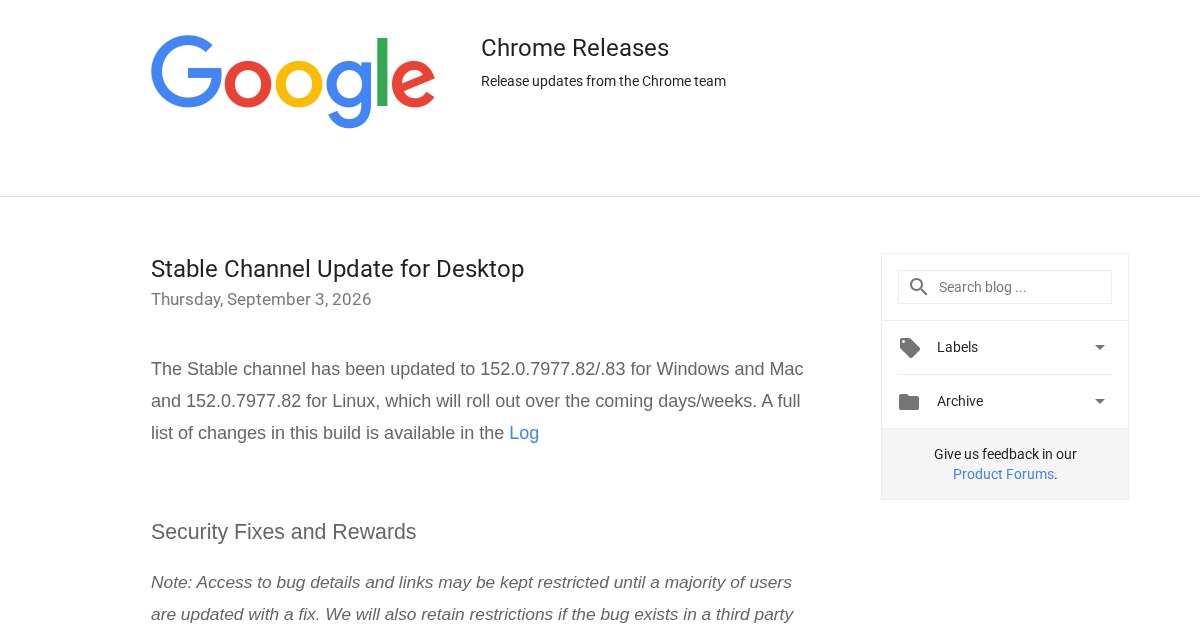
Major Chrome Zero-Day Under Active Exploit: Edge and Brave Users Need to Update Too
Google confirmed that CVE-2026-85046 in Chrome's V8 engine was actively exploited in the wild before a patch was released. Rated at CVSS 8.8, this marks the sixth exploited Chrome zero-day this year. Because the flaw resides in the Chromium engine itself, browsers sharing the same foundation—like Edge and Brave—are all affected, and the Android version requires a separate update. Here is a walkthrough of how to check and update each browser.

LINE Is Deleting Accounts by Year-End: Heads Up If You Only Linked Facebook Without a Phone Number!
The notices claiming "LINE will delete accounts without a linked phone number by year-end" are real, but they only target one specific group: accounts linked solely to Facebook with no registered phone number. Here is how to check if you're affected, how to set up your phone number, email, password, and Apple/Google link all in one go, the major pitfall where linking a number deactivates another account, and the only path left if you're already locked out.